
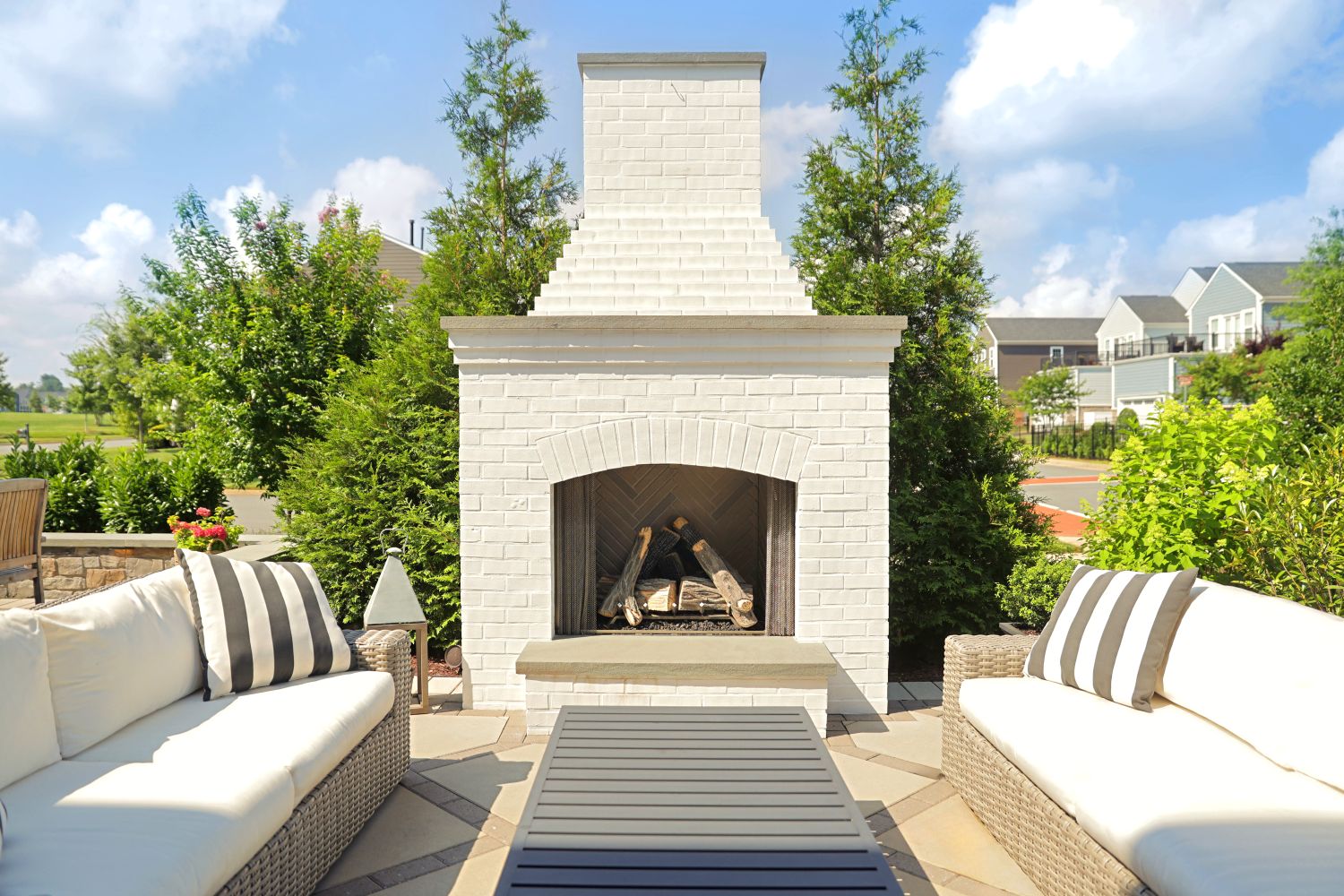
Fire Feature Design & Installation in Northern Virginia
Schedule a Free ConsultationA fire feature can create a natural gathering place, add a focal point to your outdoor space, and make a patio or backyard more inviting during cooler weather.
Outdoor Spaces designs and installs custom fire pits, outdoor fireplaces, and other fire features throughout Northern Virginia. We consider how you want to use the space, where people will sit, how the fire feature should relate to the rest of your patio or landscape, and whether gas or wood burning makes the most sense for you.
Is a Fire Pit or Outdoor Fireplace Right for Your Space?
Fire pits and fireplaces can both add warmth and atmosphere, but they affect the layout of an outdoor living area in very different ways.
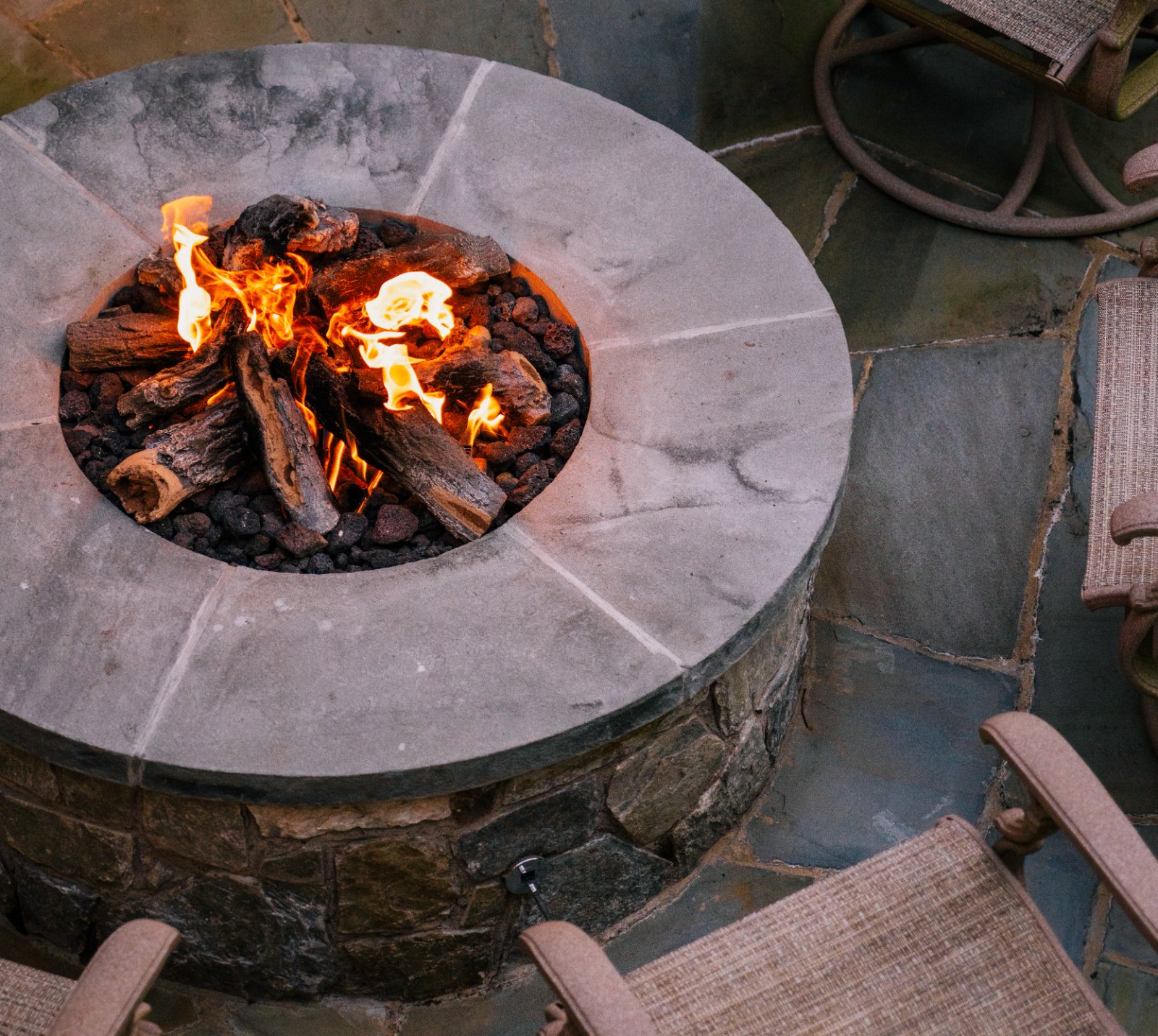
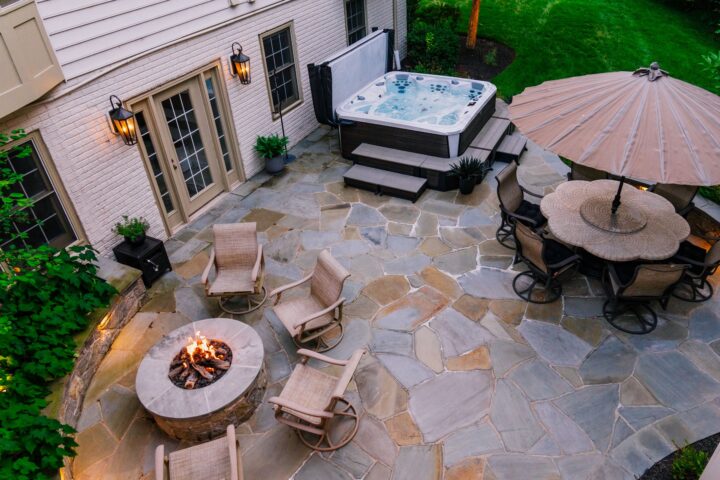
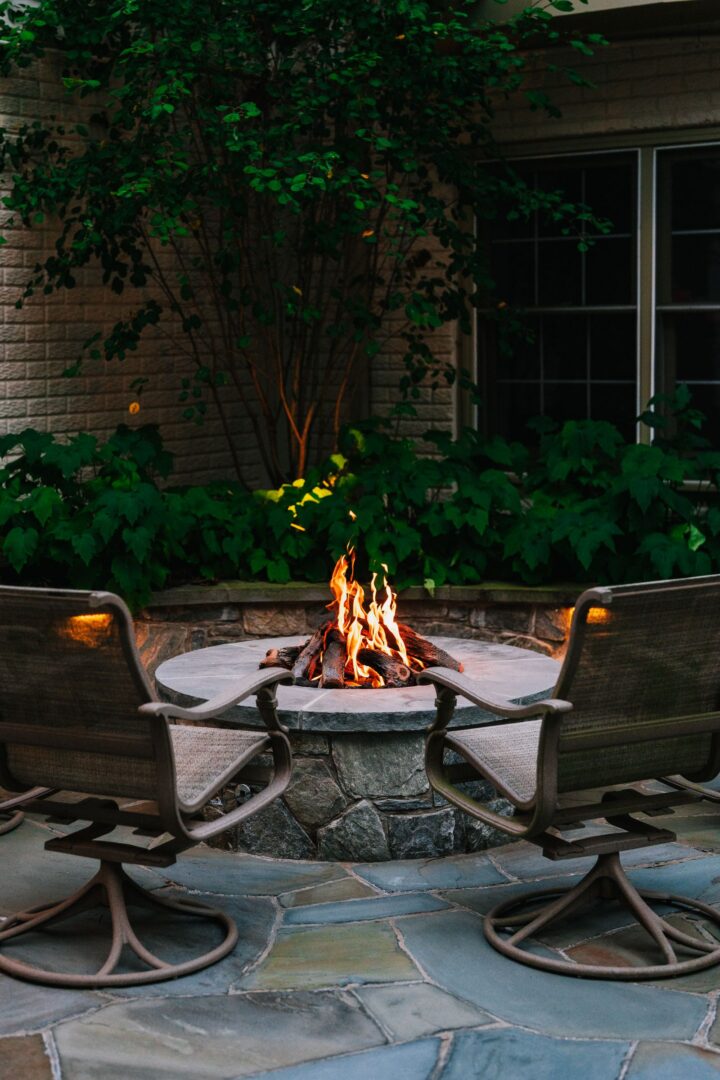
A fire pit is typically designed as the center of a gathering space. Seating surrounds the fire so family and guests can face one another and interact across it.
An outdoor fireplace usually sits along the edge of a patio or outdoor room. The fire becomes a focal point without occupying the center of the space, allowing the rest of the patio to continue functioning for dining, lounging, or entertaining.
The right option depends largely on how you want people to use the space.
Fire Feature Design Choices
Fire Pit vs. Outdoor Fireplace
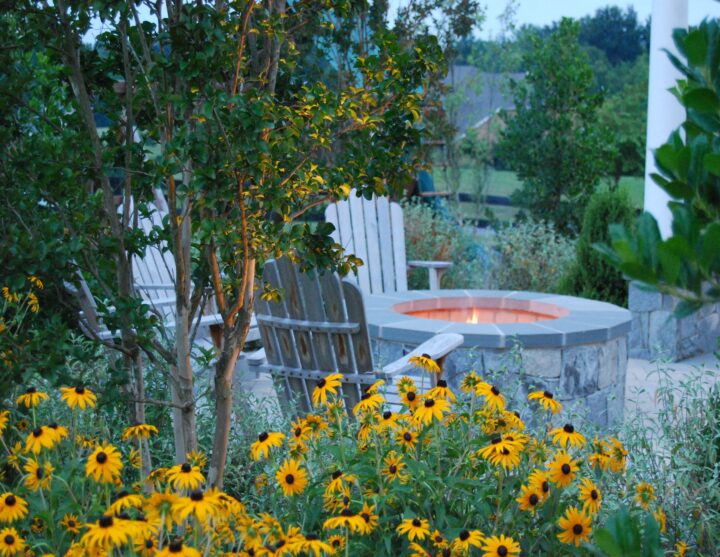
A fire pit works especially well when the goal is to create a dedicated gathering area.
It can become the centerpiece of a patio, with seating arranged around all sides for conversation, relaxing, or making s’mores.
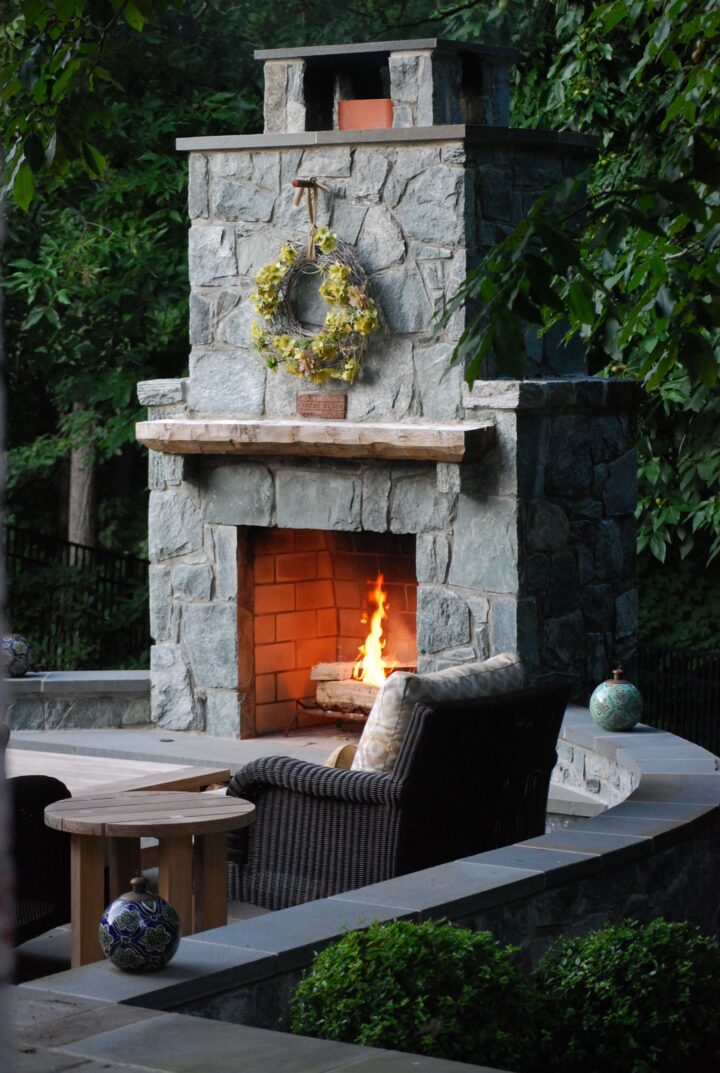
A fireplace creates a different experience. Because it is positioned at the edge of the outdoor living area, it can anchor a seating arrangement without interrupting circulation or taking over the center of the patio.
For homeowners who want the fire itself to serve as a strong architectural focal point, a fireplace may be the better fit.
Gas vs. Wood Burning
Both fire pits and outdoor fireplaces can typically be designed for gas or wood burning.
Gas fire features provide a convenient, consistent flame without requiring homeowners to store firewood or build a new fire each time they use the space.
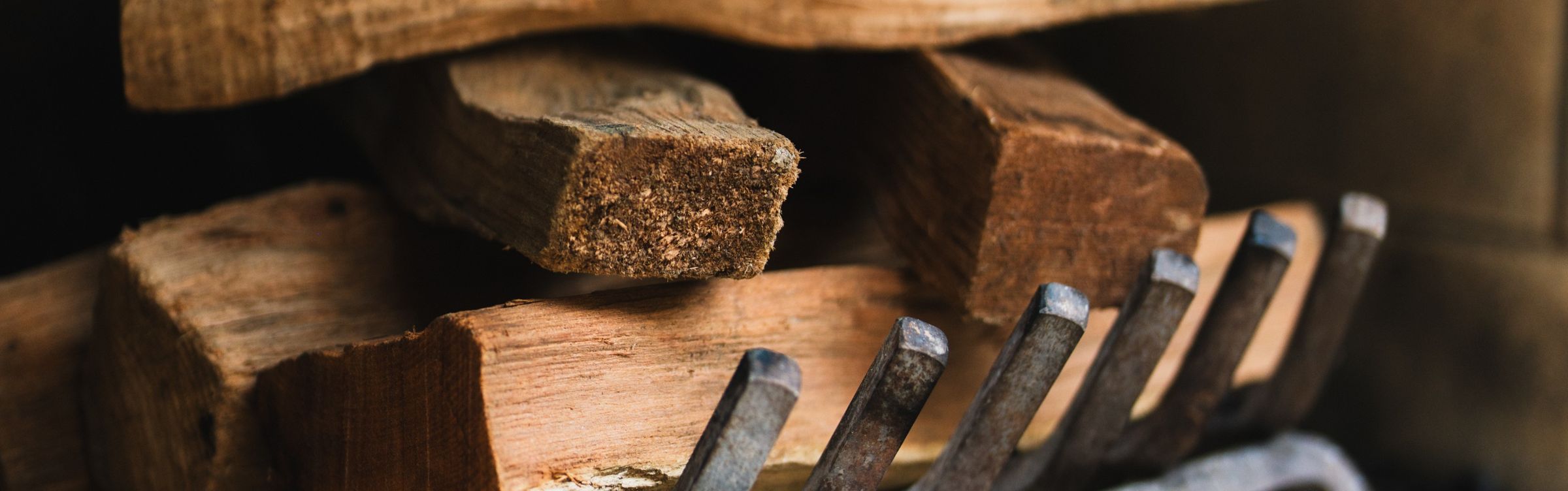
Wood-burning fire features provide a more traditional experience, including the sound, smell, and interaction of a real wood fire.
The better option comes down to how you expect to use the feature and which experience you prefer.
Placement and Surrounding Design
A fire feature works best when its location is considered as part of the overall outdoor living plan.
For a fire pit, that means making sure there is enough room for comfortable seating and circulation around the fire.
For a fireplace, placement can help define the edge of a patio, create a focal point from the house, or anchor a larger outdoor room.
Fire features can also be incorporated alongside patios, outdoor kitchens, pools, pavilions, landscaping, and other backyard elements.
Other decorative fire elements, such as fire bowls or fire columns, may also be considered when the goal is primarily visual rather than creating a central gathering space.
What Affects the Cost of a Fire Feature?
The cost of a custom fire feature depends on the type of feature, its size, materials, fuel source, and how it fits into the surrounding outdoor space.
Common factors include:
- Fire pit versus fireplace
- Gas versus wood burning
- Size and masonry requirements
- Stone, brick, or other finish materials
- Gas line installation
- Chimney and fireplace construction
- Patio or hardscape work around the feature
- Built-in seating or seat walls
- Surrounding landscaping
- Other outdoor living improvements being completed at the same time
A simple fire pit incorporated into an existing patio will have a very different scope from a large masonry fireplace built as part of a new patio, pavilion, or outdoor living room.
Considering the fire feature during the larger design process can also help avoid having to rework an existing patio or seating arrangement later.
Our Fire Feature Design Process
Consultation and Site Evaluation
The process begins with a free consultation at your home.
We will discuss how you want to use the fire feature, whether you prefer a fire pit or fireplace, your interest in gas or wood burning, your style and budget, and how the feature should relate to the rest of your outdoor space.
We will also evaluate the property, existing hardscape, seating areas, and other features that may affect placement.
Design and Presentation
Next, we develop a design around your property and goals.
We typically aim to present the initial design approximately two to three weeks after the consultation.
During the presentation, we can review the proposed location, size, materials, seating arrangement, and connections to the surrounding patio or landscape and make adjustments based on your feedback.
Construction
Once the design is approved, the project moves into construction.
Construction timing depends on the size and complexity of the fire feature, masonry work, fuel source, surrounding hardscape, material availability, and other site-specific factors.
Our team remains involved throughout the process to answer questions and help ensure the finished fire feature reflects the approved design.
Outdoor Fire Feature Design in Northern Virginia


Fire Feature FAQs
Is a Fire Pit or Fireplace Better?
It depends on how you want to use the space.
A fire pit works well as the center of a gathering area because people can sit around it and face one another. A fireplace typically sits at the edge of the space, allowing the patio to remain open for other furniture and activities.
Should I Choose a Gas or Wood-Burning Fire Feature?
Gas offers convenience and a consistent flame, while wood provides a more traditional fire experience.
The right choice depends on how much interaction you want with the fire and how you expect to use the space.
Can a Fire Feature Be Added to an Existing Patio?
In many cases, yes. The feasibility will depend on the existing patio, available space, the type of fire feature, and any utility or construction requirements. We can evaluate the existing space during the consultation and determine what options make sense.
Can a Fire Feature Be Part of a Larger Backyard Project?
Yes. Fire pits and fireplaces are often designed alongside patios, outdoor kitchens, pools, pavilions, landscaping, and other outdoor living features.
Planning these elements together can create better furniture layouts, circulation, and visual connections throughout the backyard.
Where Should an Outdoor Fireplace Be Located?
Outdoor fireplaces are generally positioned along the edge of a patio or outdoor living area.
This allows the fireplace to become a focal point while keeping the center of the space available for seating, dining, or other uses. The exact location depends on the layout of the property and surrounding features.
What Your Neighbors Are Saying
Outdoor Spaces did one amazing job on our backyard. If you are considering any stonework (we had a large stone fireplace put in), you will be blown away by the craftsmanship they produce. They remained on schedule and always had the next team ready to start the next part of the project. You will not be disappointed going with Outdoor Spaces.
— Neva