
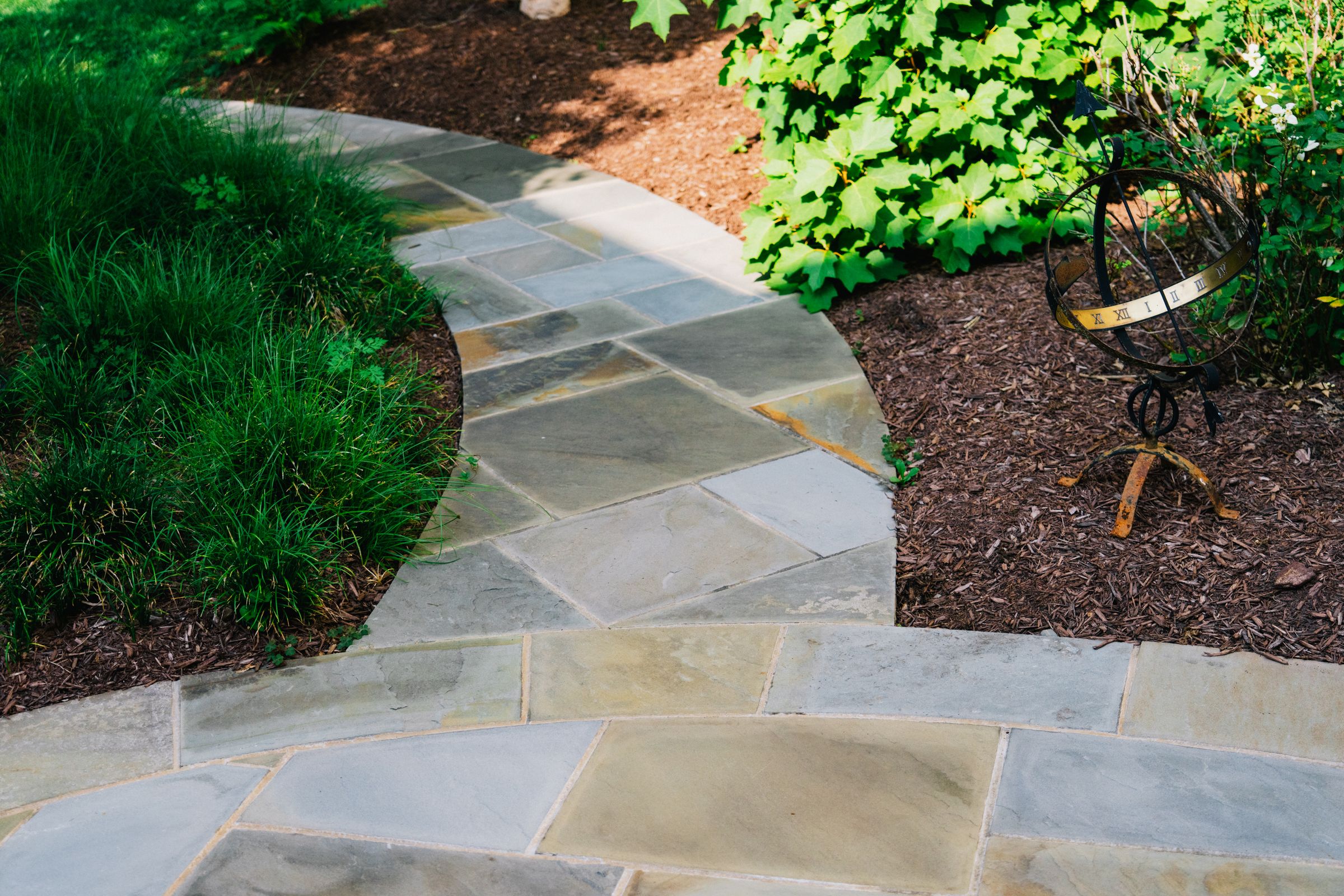
Walkway & Entryway Design in Northern Virginia
Schedule a Free ConsultationA well-designed walkway and entryway can make your home feel more welcoming while creating a safer, more intentional path from the driveway, sidewalk, or yard to your front door.
Outdoor Spaces designs and installs custom walkways, entryways, stoops, steps, and related hardscape features throughout Northern Virginia. We consider the architecture of your home, existing grade, materials, landscaping, and how people naturally move through the property.
Whether you are updating an older entrance or planning the exterior of a new home, we can help create an entry that feels like it belongs with the house.
Is It Time to Update Your Walkway or Entryway?
A front walkway does more than connect the driveway to the door. It helps establish the first impression of the property and guides visitors toward the entrance.
A new walkway or entryway may make sense if:
- The existing path is cracked, uneven, or dated
- The route to the front door feels indirect or awkward
- Steps or grade changes need to be addressed
- You want materials that better complement the architecture of the home
- You are renovating the front landscape or driveway
- You want to create a more finished transition between different parts of the property
Walkways can also serve other areas of the home, including side yards, gardens, patios, pools, and connections between front and backyard spaces.
Walkway & Entryway Design Choices
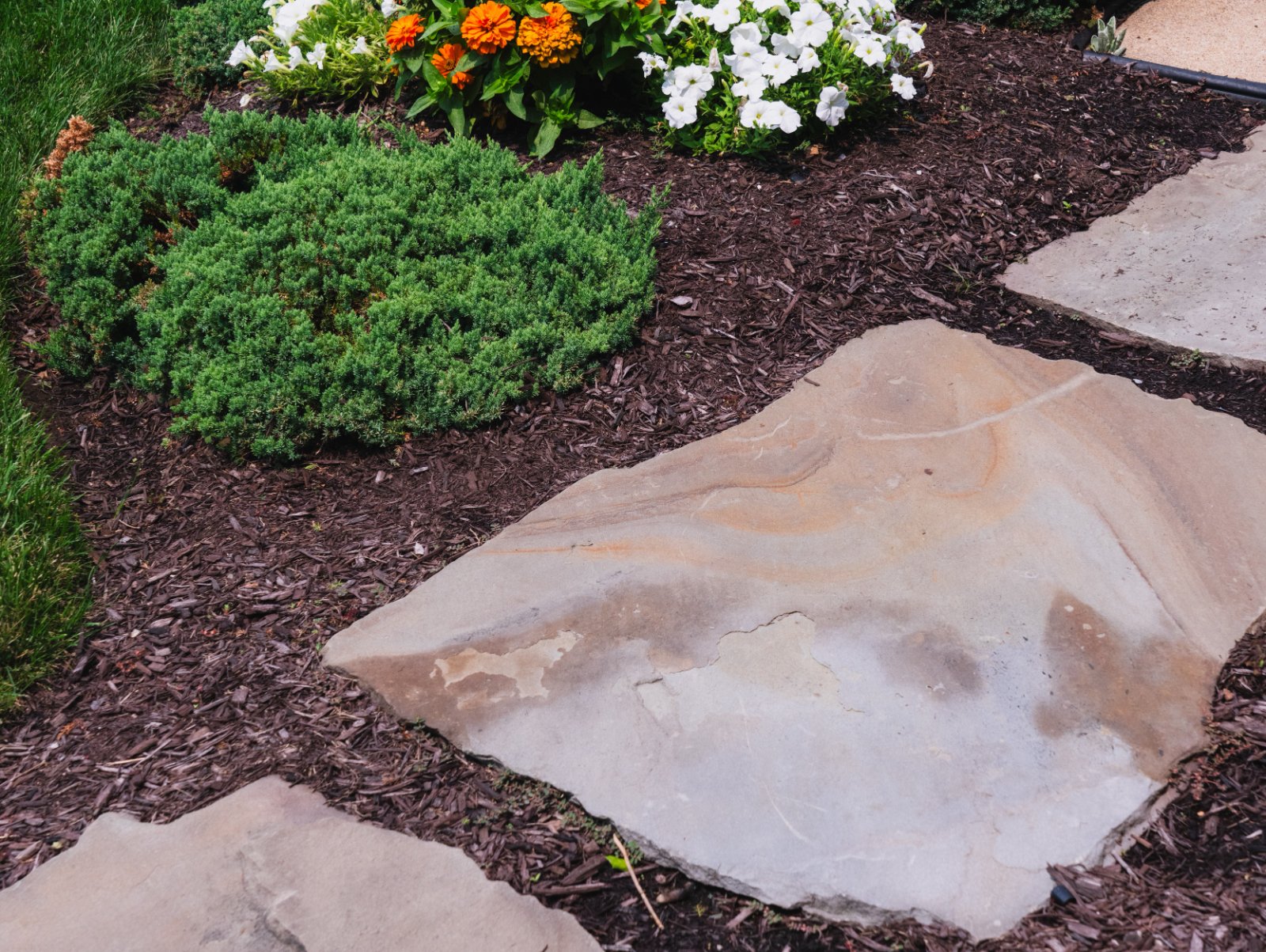
Materials
Material selection has a major impact on the character of a walkway or entry.
Common options include:
- Concrete pavers
- Flagstone and other natural stone
- Brick
- Stepping stones
- Gravel
- Combinations of multiple materials
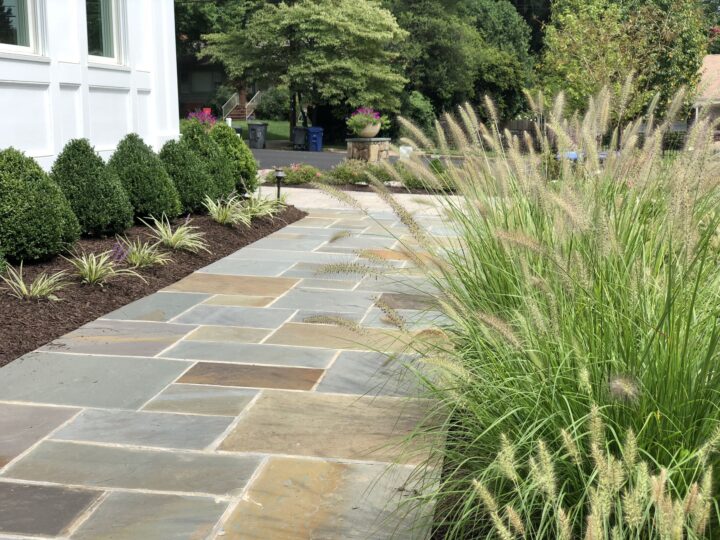
Natural stone is especially popular for front entries because it creates an upgraded, permanent appearance. Since front walkways typically cover less square footage than a large backyard patio, homeowners may also be more comfortable investing in a premium material for this highly visible part of the property.
Pavers can provide a wider range of colors, textures, and contemporary styles, while brick can be particularly appropriate for historic or traditionally styled homes.
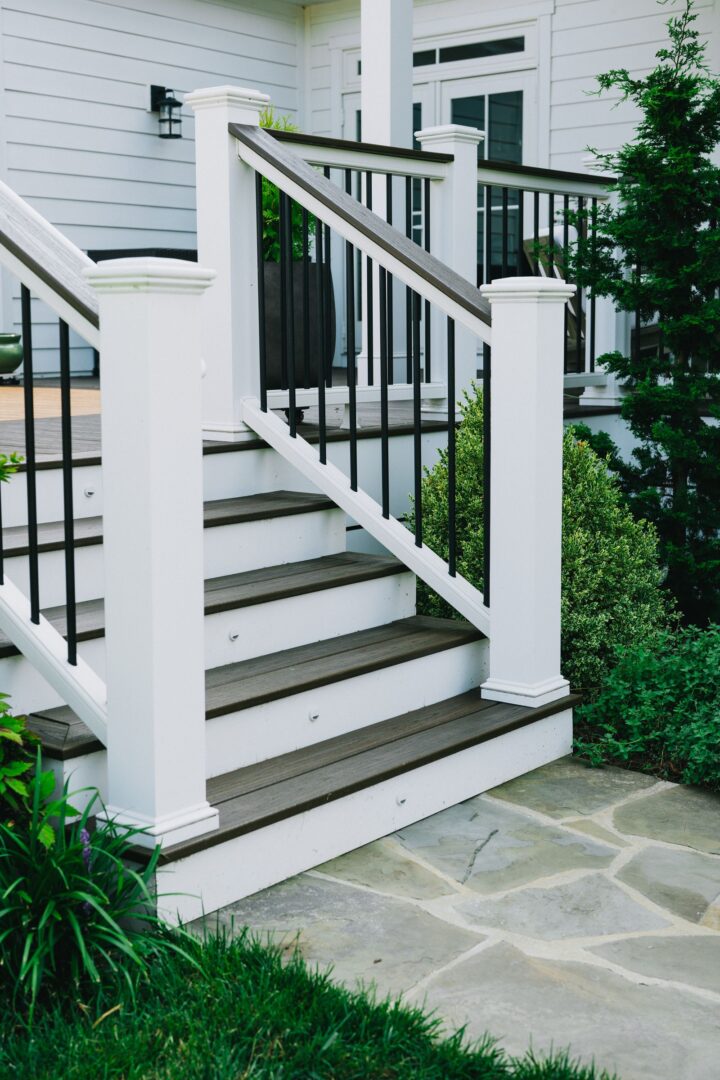
Steps, Stoops and Walls
Changes in elevation are an important part of entryway design.
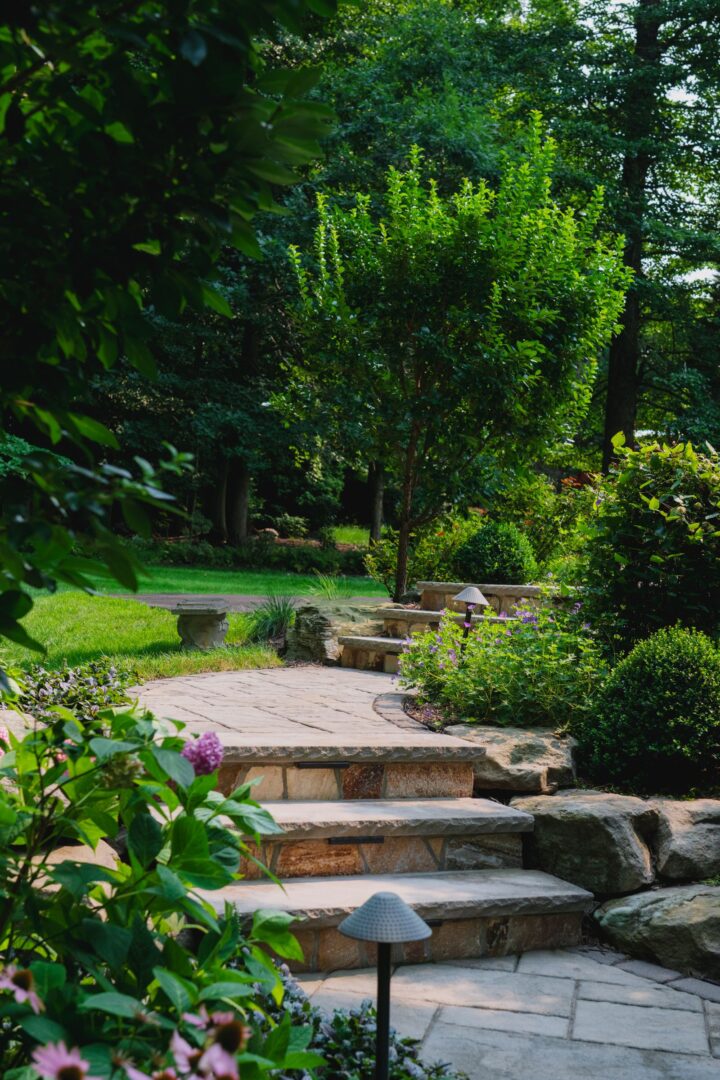
Depending on the property, the path to the home may require steps, retaining walls, or other masonry features to create a comfortable transition between grades.
Retaining walls can support soil where the property changes elevation. In some designs, a low wall can also function as a seat wall when it is built at an appropriate height.
Planning these features together with the walkway can make the entry feel intentional rather than like individual pieces were added over time.
Landscaping and Connections
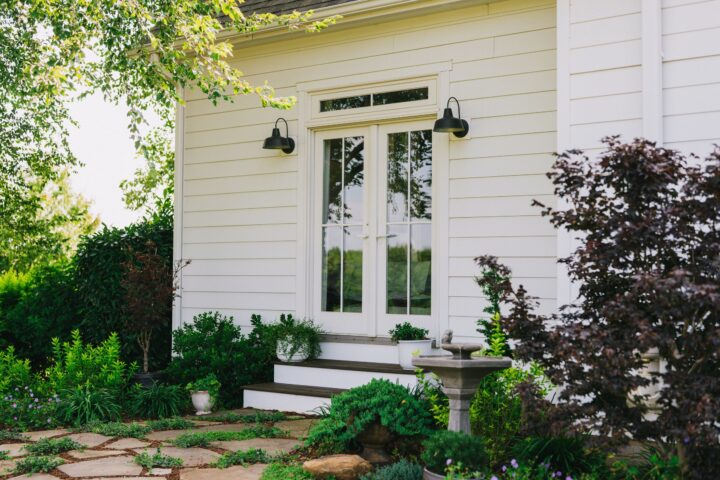
Planting can help soften hardscape and make a walkway feel connected to the rest of the property.
Trees, shrubs, perennials, and planting beds can frame an entrance, create seasonal interest, provide screening, and help guide attention toward the front door.
We also consider where the walkway should lead beyond the entry. A front path may connect naturally to a side yard, driveway, backyard, patio, or other outdoor space.
Designing those connections together helps people move through the property more naturally.
Driveway Design
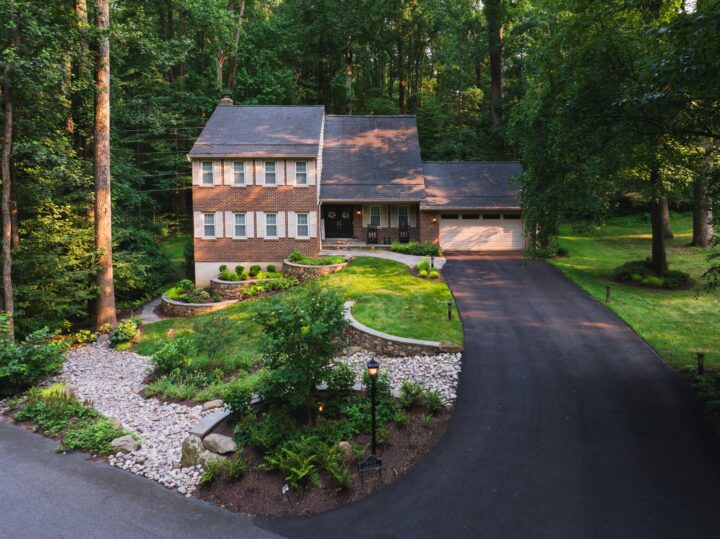
Outdoor Spaces can also incorporate driveways into a larger front-entry design.
When replacing or redesigning a driveway, we consider more than the driving surface itself. The size of the property, existing trees, grade, budget, walkway connections, and the architecture of the home can all influence the layout and material selection.
Common driveway materials include:
- Poured concrete
- Concrete pavers
- Natural stone
- Gravel
- Brick
- Asphalt
In many cases, coordinating the driveway and walkway materials can help create a more cohesive arrival experience without requiring the two surfaces to be identical.
What Affects the Cost of a Walkway or Entryway?
The cost depends on the size of the project, materials selected, existing site conditions, and the amount of masonry or grading required.
Common cost factors include:
- Walkway length and width
- Material selection
- Stairs or stoops
- Retaining or seat walls
- Property grade
- Demolition of existing hardscape
- Landscaping
- Driveway work
- Site access
For example, natural stone will generally represent a larger investment than many paver options, while a relatively flat walkway will have different construction requirements than an entrance involving multiple steps and retaining walls.
During the design process, we can help determine where upgraded materials or additional features will have the greatest visual and functional impact.
Our Walkway & Entryway Design Process
Consultation and Site Evaluation
The process begins with a free consultation at your property.
We will discuss what you want to change, the style of the home, materials you like, your budget, and how people currently enter and move through the property.
We also evaluate existing grade, steps, landscaping, driveway connections, and other site conditions that may affect the design.
Design and Presentation
Next, we develop a design around your home and goals.
We typically aim to present the initial design approximately two to three weeks after the consultation.
During the presentation, we can review the proposed layout, materials, steps, walls, landscaping, and other features and make adjustments based on your feedback.
Construction
Once the design is approved, the project moves into construction.
Construction timing depends on the size and complexity of the project, materials, site conditions, time of year, and scheduling.
Outdoor Spaces works with skilled local masons to translate the design into the finished walkway, entryway, or driveway.
Walkway Design in Northern Virginia


Walkway & Entryway FAQs
What Is the Best Material for a Front Walkway?
There is no single best option for every home.
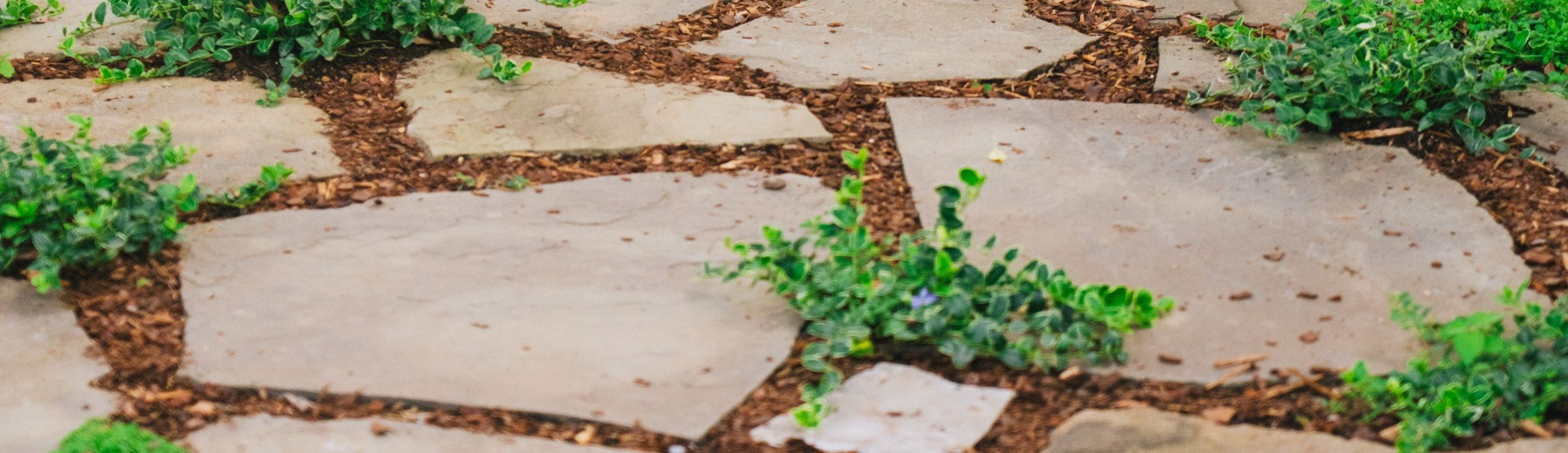
Natural stone is popular for its high-end, timeless appearance, while concrete pavers provide a broad range of colors, textures, and styles. Brick can work especially well with historic or traditional architecture.
The right material depends on the home, budget, desired style, and surrounding landscape.
Can You Add Steps or Retaining Walls to a Walkway?
Yes. Steps, retaining walls, stoops, and seat walls can all be incorporated when needed to manage elevation changes or create a more complete entry design.
Can Landscaping Be Included With the Walkway?
Yes. We can incorporate trees, shrubs, perennials, and other plantings to frame the walkway and help the hardscape feel integrated with the rest of the property.
Can You Redesign the Driveway at the Same Time?
Yes. Driveways can be planned alongside front walkways and entryways so the materials, circulation, and overall appearance work together.
Do I Need to Know Which Material I Want Before the Consultation?
No. You are welcome to bring examples of materials or styles you like, but you do not need to make those decisions in advance. We can help compare options based on your home, property, and budget.
What Your Neighbors Are Saying
Outdoor Spaces did an amazing job turning my idea into a sketch concept to a final finished build! If you are looking for a team that provides superior quality build and professionalism coupled with on-time and on-budget you found them with Outdoor Spaces!
— Chris