
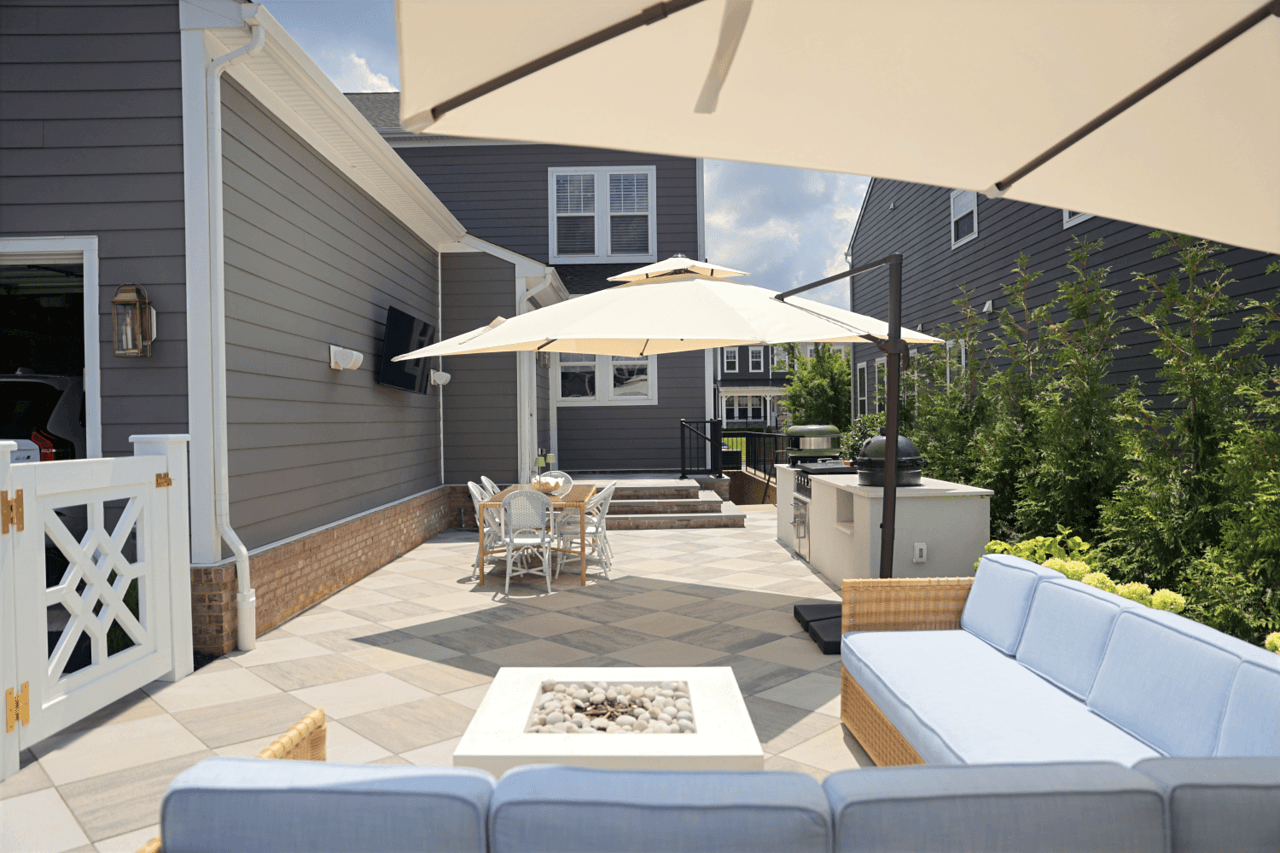
An outdoor living space should be designed by first defining how you plan to use it, then selecting the right structure, materials, and features to support those activities. The most effective designs prioritize function, flow, and long term maintenance over individual features.
Designing an outdoor living space is not about picking features at random. The most successful spaces start with a clear understanding of how you want to use your yard, then build around those priorities with the right layout, materials, and features.
Whether you are planning a patio, outdoor kitchen, or full backyard transformation, the goal is to create a space that feels natural, functional, and built for your day to day life.
Outdoor Living Design Checklist
Before getting into specific materials or features, use this framework to guide your decisions:
- Define how you will use the space
- Choose the right foundation such as a patio, deck, or porch
- Select materials based on maintenance and longevity
- Add features that support how you want to live outdoors
- Use landscaping to connect and complete the space
Following this sequence helps ensure your outdoor space functions well instead of feeling like a collection of disconnected elements.
How to Design an Outdoor Space in 5 Steps
Start With How You Want to Use the Space
Before thinking about materials or layouts, the first step is defining how the space will actually be used. This is the foundation of every successful outdoor design.
Ask yourself:
Do you want to eat outside regularly, or is this more of a lounge space?
If you’re wanting to eat outside, you should definitely consider adding an outdoor kitchen or at least an area for outdoor dining.
If relaxation is what you’re after, lounge space calls for soft seating.
And if you’d like both, it will necessitate space enough for two furniture groupings!
Will you be entertaining guests or mostly using it with family?
Knowing how many people are likely to occupy your space regularly vs. on special occasions helps you settle on sizing as well.
If you’re entertaining guests, a fire pit can be an excellent central gathering spot.
Do you prefer sun, shade, or a mix of both?
For pure shade, consider a screened-in porch.
For pure sun, an open-air patio would be better.
For a mix of both, a pergola or pavilion on top of your patio may fit your needs.
Do you need easy access to the lawn for kids or pets?
If you need more lawn space, you’ll want to ensure you incorporate that into your design rather than filling out the entire space with pavers, concrete, or brick.
Patios at ground level can offer good flow out to the lawn. Arrange landscape beds to anchor the areas around patio furniture, and bring the lawn right up to the patio edge where you want to direct traffic out.
Most homeowners struggle to come up with a clear plan for how everything should come together, and that’s OK! If you can come up with a list of features you want in your space, our strong design process can translate those ideas into a cohesive layout that supports how you actually live.
Choose the Right Foundation for Your Space
The foundation of your outdoor space determines how it functions and how it connects to your home.
Patios
Choose a patio if your space is at ground level and you want a durable, low profile surface for dining, seating, and gathering. Patios create a flat, dry area that works well for everyday use and entertaining.
Decks
Choose a deck if your home sits above grade or you need to build up to create usable space. Composite decking is typically preferred because it lasts longer and requires less maintenance than wood.
Porches
Choose a porch or covered structure if you want protection from weather and insects. Screened porches are especially popular for creating a comfortable indoor outdoor experience with added usability throughout the year. These can be built over top of a patio or deck.
Choosing the right foundation depends on your yard conditions, elevation, and how you plan to use the space.
Select Materials Based on Maintenance and Longevity
Material selection should balance appearance, cost, and long term upkeep.
Pavers
Choose pavers if you want design flexibility and a wide range of styles and colors. Pavers are installed on a compacted gravel base and are durable, but they require periodic maintenance such as re-sanding joints to prevent weeds.
Flagstone
Choose flagstone if you prefer a natural stone look with fewer ongoing maintenance tasks. Flagstone is typically installed on a concrete base with mortar joints. While it lasts longer without frequent upkeep, repairs can be more involved over time.
Concrete
Choose concrete if you are prioritizing cost and simplicity. It is commonly used in certain applications such as pool decks over a large square footage, but offers fewer customization options.
Gravel
Choose gravel for rustic spaces or as a temporary solution. It is less ideal for dining areas since furniture can be harder to stabilize and comes with more regular maintenance.
The best material depends on your budget, aesthetic goals, and how much maintenance you are willing to take on.
Add Features That Expand How You Use the Space
Features should support how you plan to use the space rather than being added for appearance alone.
Fire Features
Choose a fire pit if you want a central gathering space where people can sit across from each other and interact. Choose a fireplace if you want a focal point to the side that allows the rest of the space to remain open and flexible.
Outdoor Kitchens
Outdoor kitchens make it easier to cook and entertain at the same time. Kitchens are extremely customizable and common elements include grills, refrigeration, storage, and counter space. These are often positioned to encourage interaction rather than being placed against the home.
Outdoor Lighting
Lighting extends how long you can use the space into the evening and improves safety. Path lights, uplighting, and integrated stair and wall lighting can enhance both function and atmosphere.
Pergolas and Pavilions
Choose a pergola if you want partial shade and visual structure framing your space. Choose a pavilion if you want full coverage from sun and rain and a more protected outdoor environment.
Think Beyond the Patio With Full Outdoor Living Design
The most effective outdoor spaces consider the entire property, not just a single feature.
Pools
A pool can act as a central feature, but placement is critical. A pool close to the home offers convenience, while a pool farther away creates a destination experience that feels more private and intentional. If a pool is on the wishlist, it’s worth considering in the initial planning due to its size and complexity, even if it might be installed in a later phase.
Landscaping
Landscaping helps anchor the space and connect it to the surrounding yard. Well planned plantings provide shade, privacy, and seasonal interest while making the space feel complete.
Retaining walls and elevation changes can also define spaces and make sloped yards more functional.
What Homeowners Often Get Wrong
Many outdoor spaces fall short because of a few common mistakes.
Focusing on Features but Forgetting Function
Adding multiple features without a clear plan often leads to a space that feels disconnected. There’s often not enough room for furniture surrounding a feature, or two features competing for attention. If you think about it as a series of outdoor rooms just like the inside, the layout will be more cohesive, regardless of the number of elements included.
Underestimating Maintenance
Some materials require ongoing upkeep that homeowners do not anticipate. Choosing the right material for your lifestyle is just as important as choosing the right look. Every outdoor space will require some maintenance but the nature of the maintenance can vary.
Treating Landscaping as an Afterthought
Without landscaping, even a well built patio can feel unfinished. Plantings help tie the entire space together, grounding it, and improve how it feels over time.
Leaving Planting Beds Too Sparse
Empty planting beds lead to more weeds and more maintenance. A fuller planting approach creates a more cohesive look and reduces long term upkeep.
Understand the Design Process Before You Start
Most outdoor living projects follow a similar design process.
The first step is an on site consultation where goals, preferences, and ideas are discussed. This helps define how the space should function.
Next, a design is developed based on that input. This typically takes a few weeks and results in a plan that outlines layout, features, and materials.
Taking the time to get the design right leads to better outcomes and fewer changes during construction.
If a homeowner can provide the “what”, the designer is the expert on the “where” and “how big”.
Ready to Start Designing Your Outdoor Space
A well designed outdoor living space should feel like a natural extension of your home. By focusing on how you want to use the space and making informed decisions about layout, materials, and features, you can create an environment that works for years to come.
FAQs About Designing an Outdoor Living Space
What is the best material for a patio in Virginia?
In Virginia, pavers and natural stone are the most common patio materials. Pavers offer flexibility and lower upfront cost, while natural stone provides a more premium appearance with less frequent maintenance.
Is a patio or deck better for resale value?
Both can add value. In 2025, a wood deck could be expected to recoup about 65-75% of its cost while a patio typically produces a 50-75% return on investment. However, patios are often preferred for ground level homes because they create a more seamless connection to the yard. Overall design quality and usability have a greater impact on value than the structure itself.
How much maintenance do paver patios require?
Paver patios typically require joint sand to be refreshed every few years to prevent weeds and maintain stability. Regular cleaning and occasional sealing can help extend their lifespan.
What is the difference between a pergola and a pavilion?
A pergola provides partial shade with an open roof structure. A pavilion has a solid roof that offers full protection from sun and rain, making it more suitable for all weather use.
How long does it take to design an outdoor living space?
The design phase usually takes a few weeks depending on the complexity of the project. This includes gathering input, site analysis, developing the layout, and refining the plan before construction begins.